

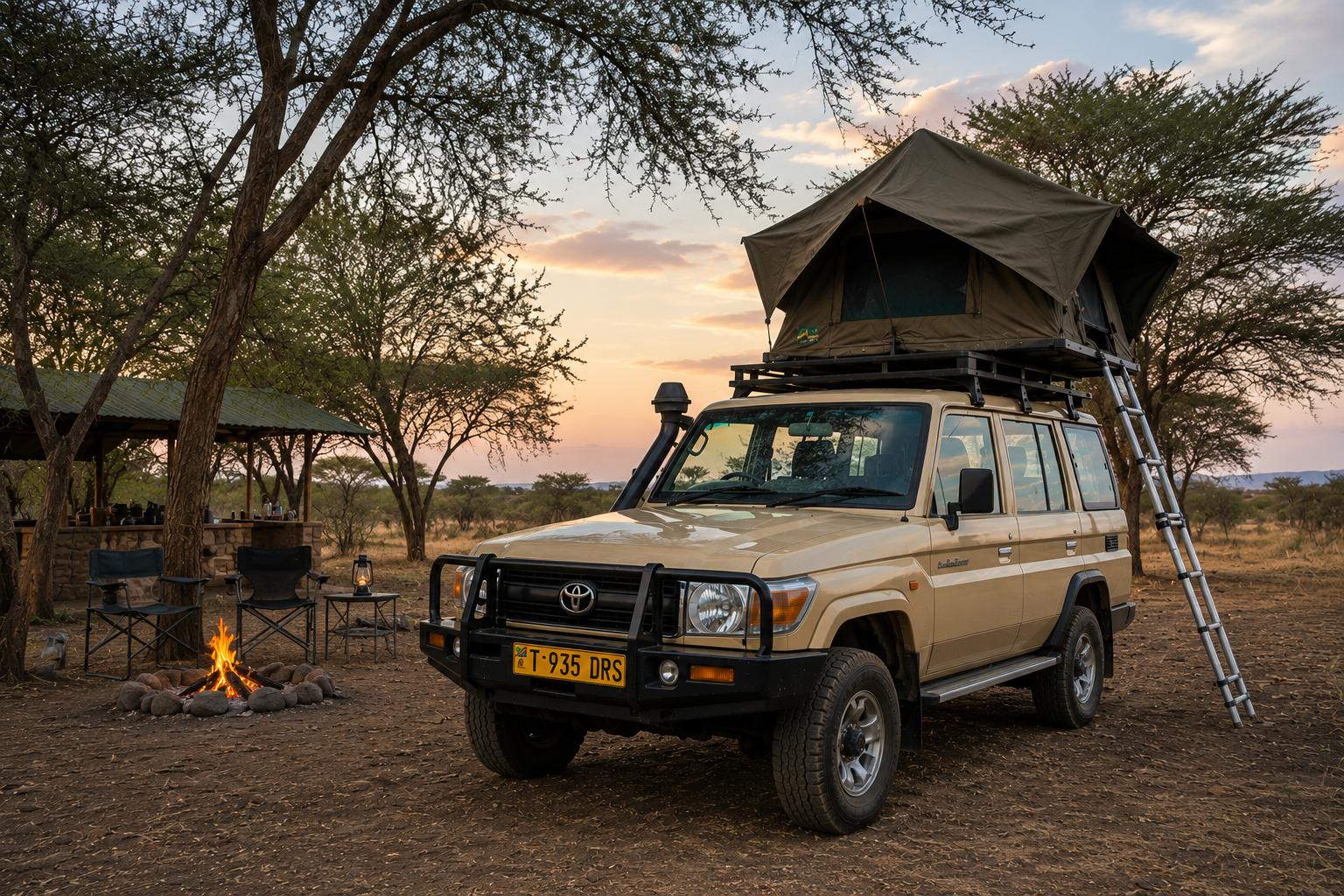
Planning a self-drive Serengeti safari requires a clear understanding of the park fees you will need to pay before you start your journey. Serengeti National Park is managed by the Tanzania National Parks Authority (TANAPA), and several different fees can apply depending on your nationality, vehicle, accommodation and activities.
This guide explains the main Serengeti National Park fees for 2026, including park entry fees, vehicle fees, camping fees, additional activities and payment methods, so you can plan your Tanzania self-drive safari budget with confidence.
Understanding the fees in advance also helps you avoid unexpected costs when you arrive at the park gates.
Visitor Categories for Serengeti National Park Fees
TANAPA divides visitors into different pricing categories based on residency and citizenship. The category you fall under has a significant impact on the amount you pay.
Make sure you carry the appropriate identification or documentation to prove your visitor category.
Foreign Non-Residents (FNR)
Foreign Non-Residents are international visitors travelling to Tanzania as tourists without a valid Tanzanian or East African residence permit. This generally includes visitors from Europe, North America, Asia, Australia and other parts of the world.
Foreign Non-Residents normally pay the highest applicable park fees.
Foreign Residents (FR)
Foreign Residents living in Tanzania or another East African Community country with valid residence documentation may qualify for resident rates.
You should carry your original valid residence permit or other required documentation when entering the park.
East African Citizens (EAC)
Citizens of eligible East African Community countries, including Tanzania, Kenya, Uganda, Rwanda, Burundi, South Sudan and the Democratic Republic of Congo, qualify for EAC citizen rates when they provide valid identification or passports.
Children’s Rates
Children are charged according to their age and visitor category.
Children aged 0–5 years may enter Serengeti free of charge when accompanied by adults, while children in the applicable older age category pay reduced rates.
Always carry proof of age, such as a passport or birth certificate, when travelling with children.
Important: Visitor categories are checked at park entry points. Make sure you provide the correct documentation and pay the applicable fee for your category.
Serengeti National Park Entry Fees
The park entry or conservation fee is charged separately from vehicle and camping fees. Serengeti entry fees are generally calculated according to 24-hour periods from the time of entry, rather than simply according to calendar dates. For example, if you enter the park at 3:00 PM, your 24-hour period runs until 3:00 PM the following day.
Current Serengeti Entry Fees
Typical published rates include:
- Foreign Non-Residents: USD 70 per person
- Foreign Residents: USD 30 per person
- East African Citizens: TZS 10,000 per person
These rates may be subject to change. Always confirm the applicable rates with TANAPA before your trip.
What Does the Entry Fee Include?
The conservation fee provides access to the park and its designated roads and visitor facilities.
However, the entry fee does not automatically include:
- Camping fees
- Special activities
- Private accommodation
- Guide fees
- Vehicle rental
- Food and drinks
Each park has its own applicable fees, so a Serengeti entry fee does not cover entry to other destinations such as Ngorongoro Conservation Area.
How Many Entry Fees Will You Pay?
For a self-drive safari, it is important to calculate park fees based on the actual amount of time you will spend inside Serengeti. For example, if two Foreign Non-Residents spend three 24-hour periods in the park:
2 people × USD 70 × 3 days = USD 420
This is only the park entry fee. Vehicle, camping, accommodation and other costs are calculated separately.
Serengeti Vehicle Entry Fees
In addition to passenger conservation fees, vehicles entering Serengeti are subject to separate vehicle entry charges. The amount depends on the vehicle type and registration.
Example Vehicle Fees
| Vehicle Type | Foreign Registered | Tanzania Registered |
|---|---|---|
| Saloon Car / 2WD | USD 40 | TZS 20,000 |
| Safari 4×4 / SUV | Varies by vehicle | TZS 30,000 |
| Minibus | USD 100–150 | TZS 30,000 |
| Large Bus | USD 200 | TZS 200,000 |
Exact fees can vary according to the vehicle category and current TANAPA tariff.
Why Vehicle Registration Matters
For self-drive travellers renting a vehicle in Tanzania, the registration status of the rental vehicle is important. A Tanzania-registered rental vehicle can have significantly different park vehicle charges compared with a foreign-registered vehicle.
If you are bringing your own vehicle into Tanzania, make sure you understand the applicable vehicle fees before starting your safari. At Tanzania Self Drive Safaris, we can help you understand the vehicle-related costs associated with your rental and planned route.
Camping Fees in Serengeti
If you are planning a self-drive camping safari, camping fees are charged separately from the park entry and vehicle fees. Serengeti provides different camping options, including public and special campsites.
Public Campsites
Typical published rates include:
- Foreign Non-Residents: USD 30 per person per night
- Foreign Residents: USD 20 per person per night
- East African Citizens: TZS 5,000 per person per night
Public campsites generally provide basic facilities such as toilets and, depending on the location, access to water. Facilities vary between campsites, and travellers should not expect the same services available at a lodge or permanent tented camp.
Special Campsites
Special campsites offer a more private camping experience and are generally booked for exclusive use. Typical published rates include:
- Foreign Non-Residents: USD 50 per person per night
- Foreign Residents: USD 40 per person per night
- East African Citizens: TZS 30,000 per person per night
Special campsites may have limited or no facilities, meaning that self-drive travellers need to be properly prepared and self-sufficient.
Camping Reservations
Camping arrangements should be made well in advance, particularly during busy travel periods. If you are planning a self-drive camping safari, check campsite availability and current booking requirements before travelling.
Additional Serengeti Activities and Fees
Some activities may involve additional charges beyond standard park entry.
Guided Walking Safaris
Where permitted, walking safaris may involve additional fees and must follow the applicable park regulations and arrangements.
Night Game Drives
Night game drives are not generally permitted within Serengeti National Park itself. Certain areas outside the national park may offer night activities under their own regulations and fee structures.
Cultural Visits
Cultural experiences near the Serengeti and surrounding communities may involve separate charges. These are generally operated independently from TANAPA.
Photography and Filming
Ordinary tourist photography is generally covered by normal park entry arrangements. Commercial filming and professional photography may require additional permits and fees. Drone use is also subject to specific regulations and permissions. Do not assume that you can operate a drone simply because you are carrying one.
How to Pay Serengeti National Park Fees
Understanding how and when to pay your fees can make your arrival at the park much easier.
Online Payment
Where available, advance payment through TANAPA’s official systems can help reduce delays at park gates. Keep your payment confirmation and supporting documents available when you arrive.
Payment at Park Gates
Depending on the gate and current TANAPA arrangements, payments may be possible using accepted cards or cash. Payment systems can occasionally experience technical problems, so it is sensible to have an alternative payment method available.
Bank Transfer
Advance bank payments may be available for certain bookings and arrangements. Confirm the current procedure directly with TANAPA before making a transfer.
Important
Payment methods and procedures can change. Before your safari, confirm the current payment options and requirements with TANAPA.
Serengeti Gate Opening Hours
Serengeti park gates operate according to TANAPA’s current regulations and opening hours. Published guidance indicates that Serengeti gates generally operate from approximately 6:00 AM to 6:00 PM. Driving inside the park after the permitted hours is generally not allowed except under specific authorised arrangements.
For self-drive travellers, this is particularly important.
Plan your daily route carefully so that you have enough time to reach your campsite or accommodation before the relevant closing time.
Do not plan your itinerary around arriving at a gate at the last possible minute.
How Much Does a Serengeti Self-Drive Safari Cost?
The total cost of a Serengeti self-drive safari consists of much more than park entry fees.
You should consider:
- Park entry fees
- Vehicle entry fees
- 4×4 rental
- Fuel
- Camping fees
- Accommodation
- Food
- Camping equipment
- Additional activities
- Other park or conservation charges
Example: Solo Traveller
For a solo Foreign Non-Resident spending three days and two nights in Serengeti using public camping:
- Park entry: USD 70 × 3 days = USD 210
- Vehicle fees: applicable vehicle charge × 3 days
- Camping: USD 30 × 2 nights = USD 60
The total park-related cost will therefore depend on the applicable vehicle fee and other charges.
Example: Couple
For two Foreign Non-Residents spending five days in Serengeti:
- Park entry: 2 × USD 70 × 5 days = USD 700
- Vehicle fees: applicable vehicle charge × 5 days
- Camping: 2 × USD 30 × 2 nights = USD 120
Accommodation, vehicle rental, fuel, food and other expenses would then be added separately. These examples are intended to demonstrate how the fees are calculated. Always check the current official rates before travelling.
How to Keep Your Safari Budget Under Control
A self-drive safari gives you considerable flexibility when planning your overall trip. Some practical ways to manage your budget include:
Travel With Friends
Sharing the cost of the vehicle and some equipment among several travellers can reduce the cost per person.
Consider Camping
Camping can cost considerably less than staying in lodges, although you need to factor in camping equipment and food.
Plan Your Route Carefully
Avoid unnecessary long-distance driving and structure your itinerary efficiently.
Understand Park Fees Before Booking
Calculate your expected entry, vehicle and camping fees before confirming your itinerary.
Allow a Contingency
Park fees, fuel prices and other travel costs can change. Leave some room in your budget for unexpected expenses.
Do Serengeti Fees Change?
Yes.
TANAPA may review and update its tariffs from time to time. The rates in this guide are intended as a 2026 reference, but they should not be treated as permanently fixed prices.
If you are booking your safari far in advance, always check the latest official TANAPA information before finalising your budget.
Where Do Serengeti Park Fees Go?
Your park fees contribute towards the management and conservation of Tanzania’s protected areas. Revenue supports activities such as:
Wildlife Protection
Supporting rangers and conservation operations helps protect wildlife and natural habitats.
Anti-Poaching
Park management and ranger operations play an important role in protecting Tanzania’s wildlife from illegal activities.
Infrastructure
Fees contribute towards roads, visitor facilities, ranger posts, campsites and other park infrastructure.
Wildlife Management and Research
Conservation authorities use resources to monitor wildlife populations and manage the ecosystem.
Supporting Conservation
Your safari contributes directly to the continued protection of one of Africa’s most important wildlife ecosystems. For travellers, understanding where the money goes can make the cost of a safari feel very different. You are not simply paying for access to a game-drive area. Your contribution also helps maintain the environment and wildlife that make the Serengeti so special.
Frequently Asked Questions About Serengeti National Park Fees
Can I pay Serengeti park fees by credit card?
Payment options can vary by location and may change. Where card payment is available, Visa and Mastercard are commonly accepted. It is still sensible to have a backup payment method. Advance payment through the official TANAPA system may also be available.
Does the Serengeti entry fee include Ngorongoro Crater?
No.
Ngorongoro Conservation Area is managed separately by the Ngorongoro Conservation Area Authority (NCAA) and has its own fees. If your self-drive itinerary includes both Serengeti and Ngorongoro, budget for the applicable charges for each destination.
Do I pay again if I stay several days?
Yes.
Serengeti conservation fees are generally calculated according to the applicable 24-hour periods. A multi-day stay therefore requires multiple days of entry fees.
Are children charged park fees?
Children’s rates depend on their age and visitor category. Young children may qualify for free entry, while older children generally pay reduced rates. Carry proof of age when travelling with children.
Can I get a refund if I leave the park early?
Do not assume that unused park time will be refunded. Park fees are subject to TANAPA’s applicable terms and conditions.
Can foreign tourists buy an annual Serengeti pass?
Annual arrangements and eligibility depend on TANAPA’s current regulations and visitor category. Foreign tourists should confirm directly with TANAPA before planning around an annual pass.
What happens if park fees change before my safari?
If you are planning your safari well in advance, always check the current TANAPA tariff before travelling. Do not rely on an old blog post or a fee quoted several years ago.
Plan Your Serengeti Self-Drive Safari With Confidence
Understanding Serengeti National Park fees is an important part of planning a successful self-drive safari in Tanzania. Before setting off, make sure you have considered all the major costs:
- Park entry fees
- Vehicle fees
- Camping or accommodation
- 4×4 rental
- Fuel
- Food
- Additional activities
With the right preparation, you can create a realistic safari budget and avoid unpleasant surprises during your journey. At Tanzania Self Drive Safaris, we provide reliable 4×4 vehicles for travellers who want to explore Tanzania independently.
Our team can help you understand the practical aspects of your self-drive journey, including your vehicle, route, camping arrangements and the costs you should consider when planning your safari.
Ready to Explore the Serengeti?
Whether you are planning a short Serengeti adventure or a longer Tanzania self-drive safari, the journey starts with choosing the right vehicle and planning your route carefully.
Explore our 4×4 vehicles and start planning your Tanzania self-drive safari today.
Tanzania Self Drive Safaris
Your vehicle. Your route. Your adventure.